Complex academic portfolio into an intuitive platform

Client
Immerse Education is an award-winning provider of academic programs based in the United Kingdom. Founded in 2012, they offer exceptional educational experiences to ambitious students aged 11-18, with programs held in inspiring locations such as colleges of Cambridge University, all designed by expert tutors from leading universities. The company is officially referred to as ‘Immerse Education’ or ‘Immerse’.
Description
Immerse Education runs one of the UK's most respected academic enrichment programs — Cambridge colleges, expert tutors, students aged 11 to 18 from around the world. The product is exceptional. The challenge was that their catalog had grown complex enough that finding the right program required more effort than it should. atQuo redesigned the platform from the ground up: audience segmentation from the first click, an interactive search engine that filters by age, location, model, and subject, and a full enrollment flow built to reduce friction at every step.
Immerse - Website - 1
Immerse - Website - 2
Immerse - Website - 3
Immerse - Website - 4
Immerse - Website - 5
IMmerse - Website - 6
Immerse - Website - 7
Immerse - Website - 8
Immerse - Website - 10
Immerse - Website - 11
Immerse - Website - 12
Immerse - Website - 13
Immerse - Website - 14
Immerse - Website - 15
Immerse - Website - 17
Immerse - Website - 18
No items found.
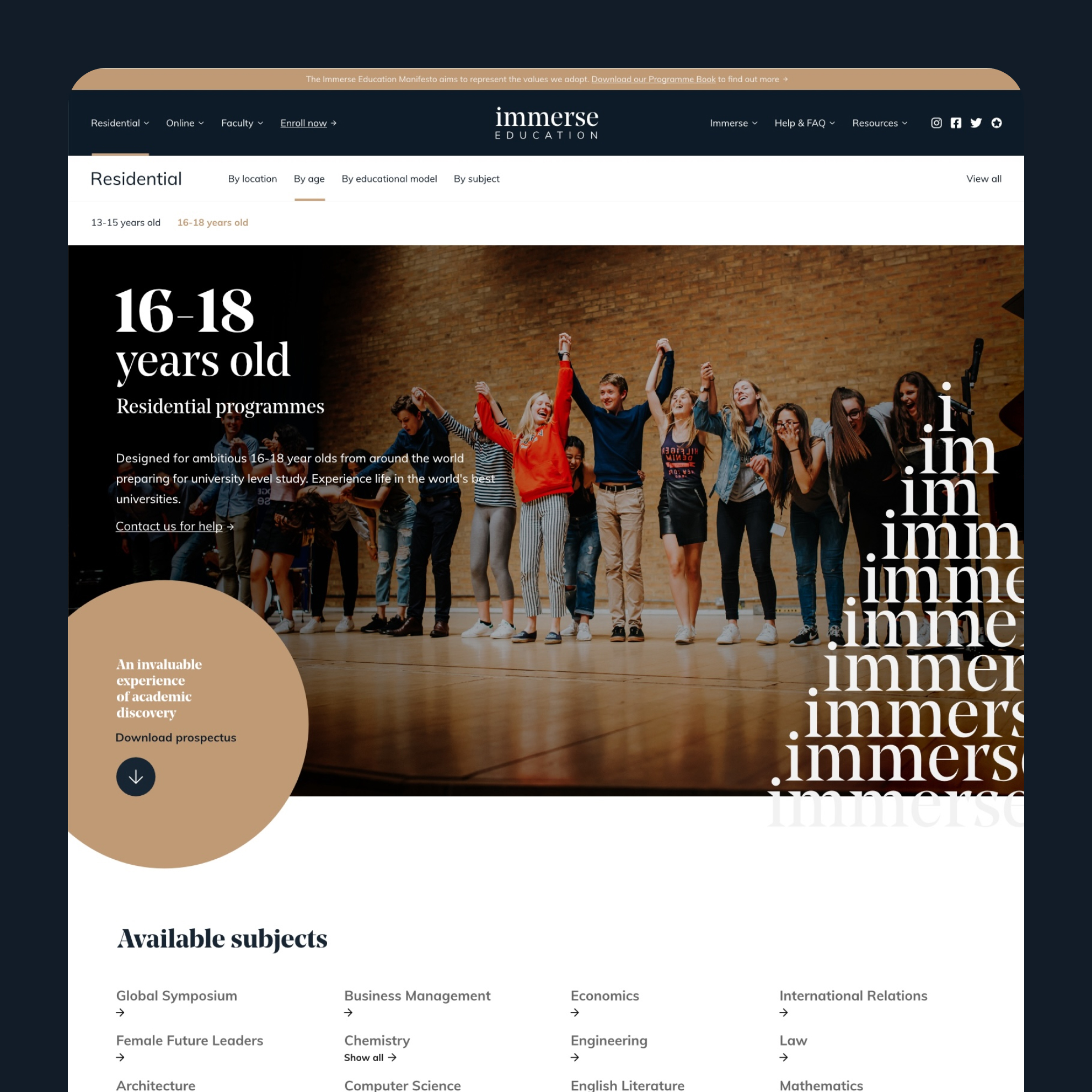
The design established a high-impact residential program landing page for the 16-18 age segment, utilizing a clear filtering system and structured subject listing for immediate program access.
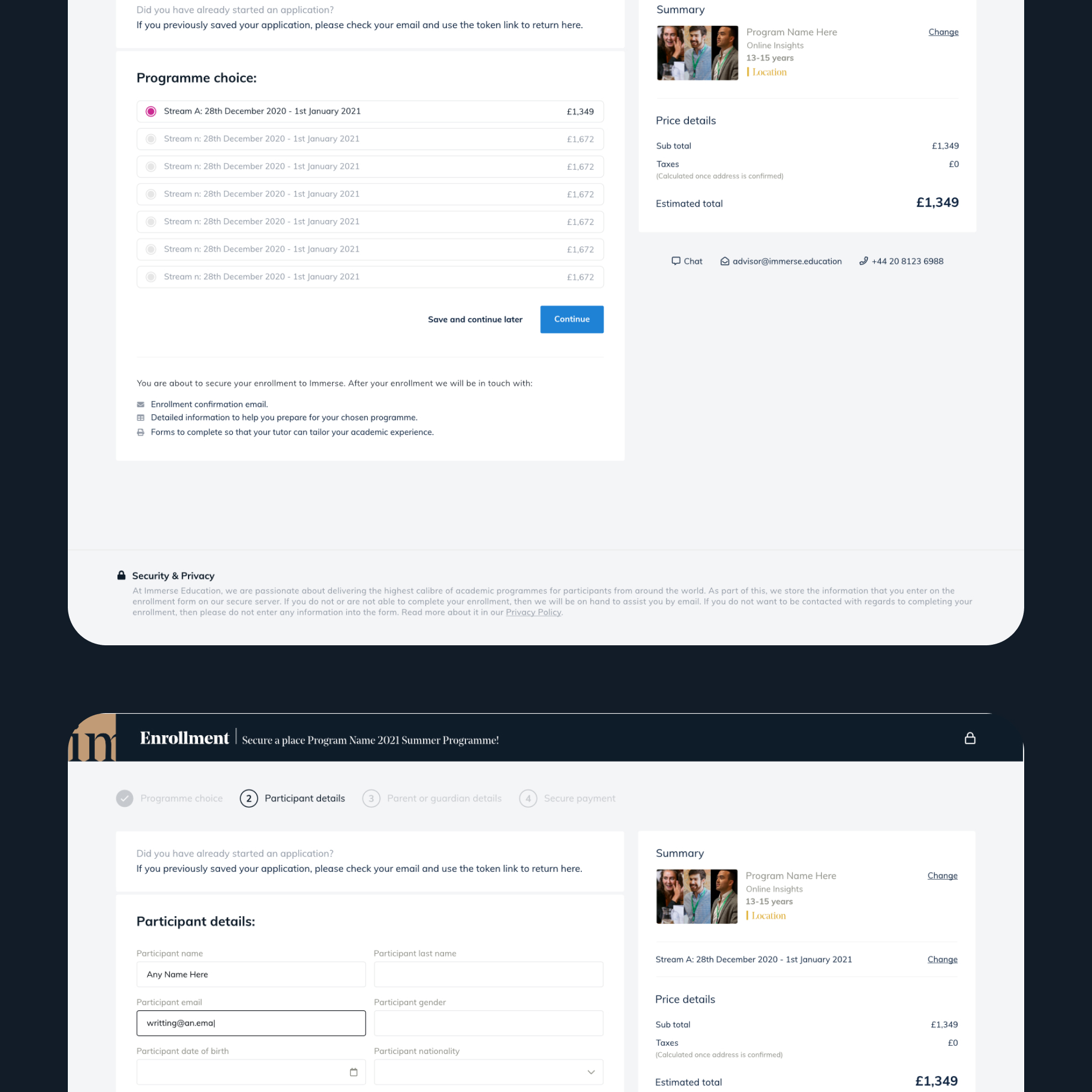
The final step, the enrollment and checkout sequence, was simplified into a secure, multi-stage flow, beginning with a clear program choice and a real-time price summary to ensure user confidence.
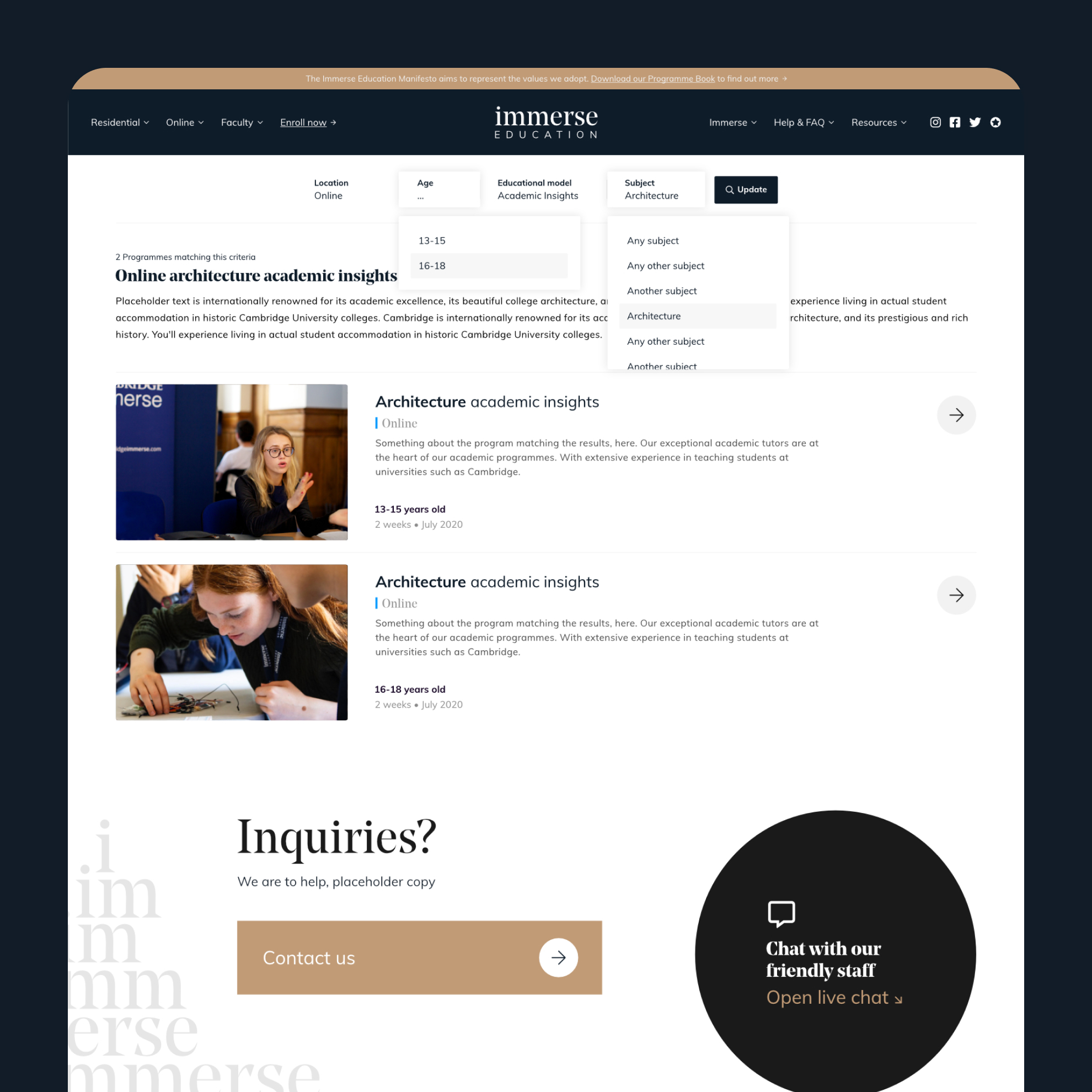
The interactive program search results interface was engineered to efficiently process multiple user inputs (location, age, model, subject) and instantly display relevant online and residential program options.
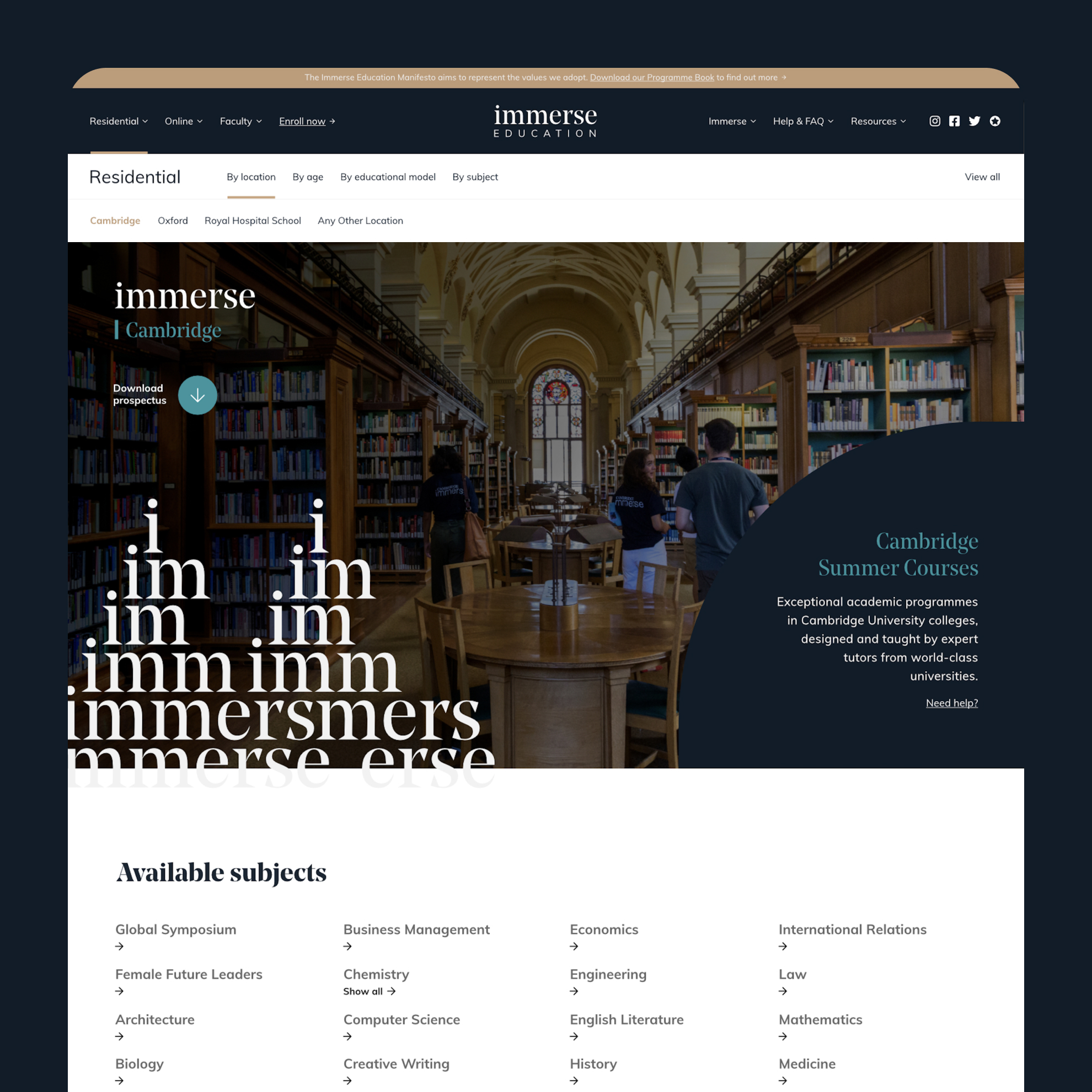
We applied the location filter to present the Cambridge Summer Courses destination page, featuring an aspirational visual aesthetic and concise calls to action for program exploration.
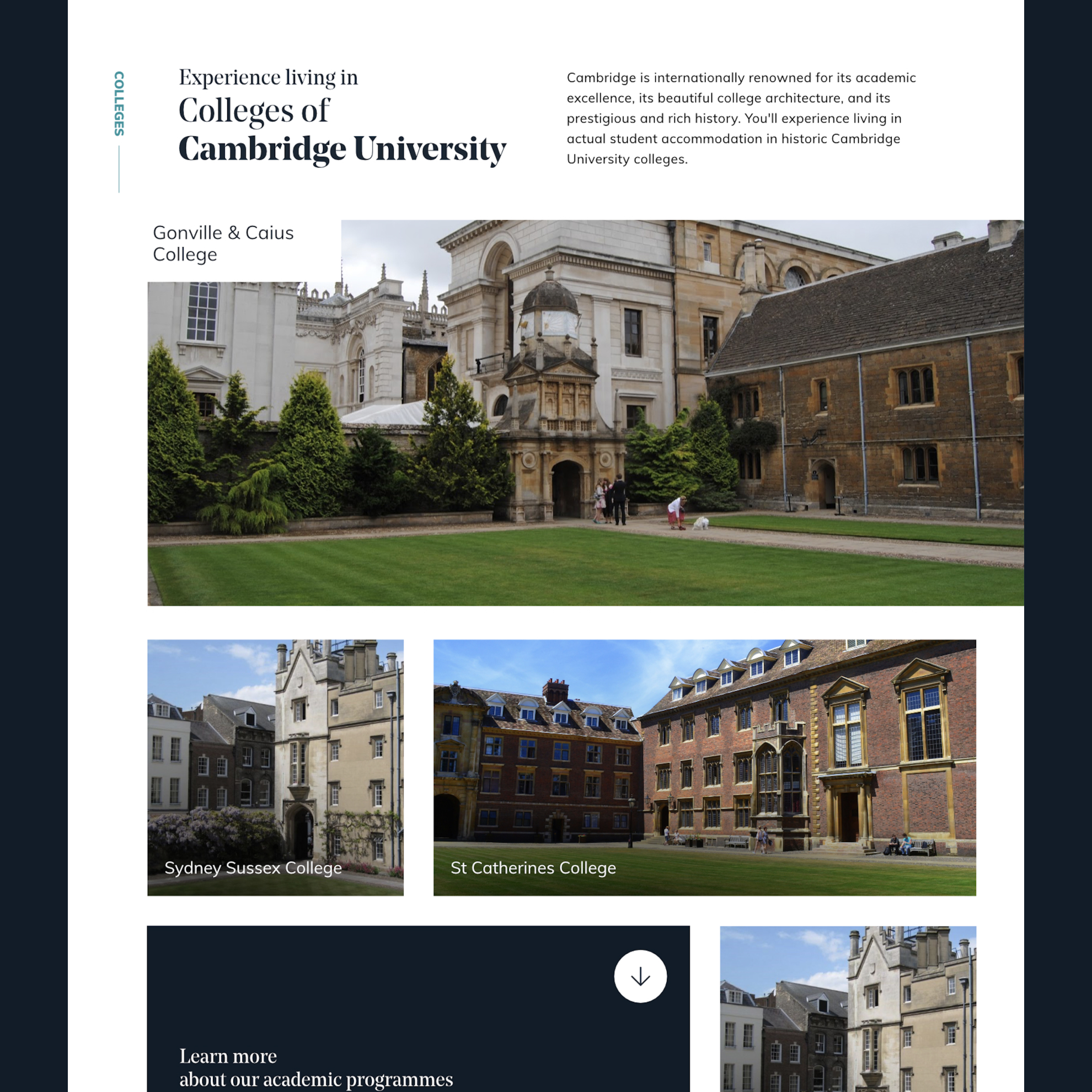
A dedicated content module was developed to showcase the authentic college experience within Cambridge, using a clean grid layout for high-quality visuals of key locations like Gonville & Caius College.
The educational models template was designed to clearly segment and explain the different program types, allowing users to easily browse and select programs based on age, starting with the academic insights model.
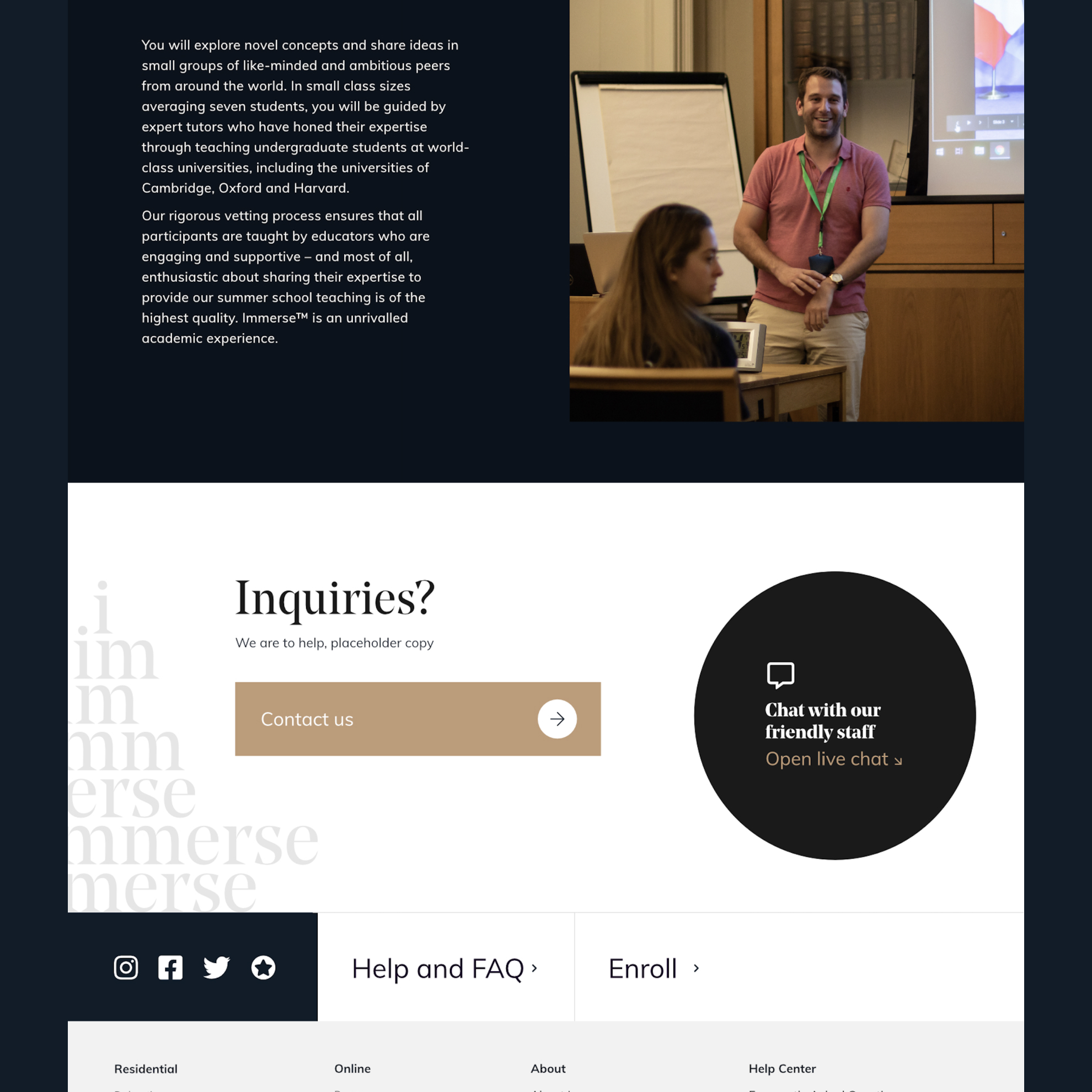
A standardized 'Inquiries' section was integrated across relevant pages, featuring two clear channels—a contact form and a 'chat with our friendly staff' button—to minimize user friction at the point of decision.
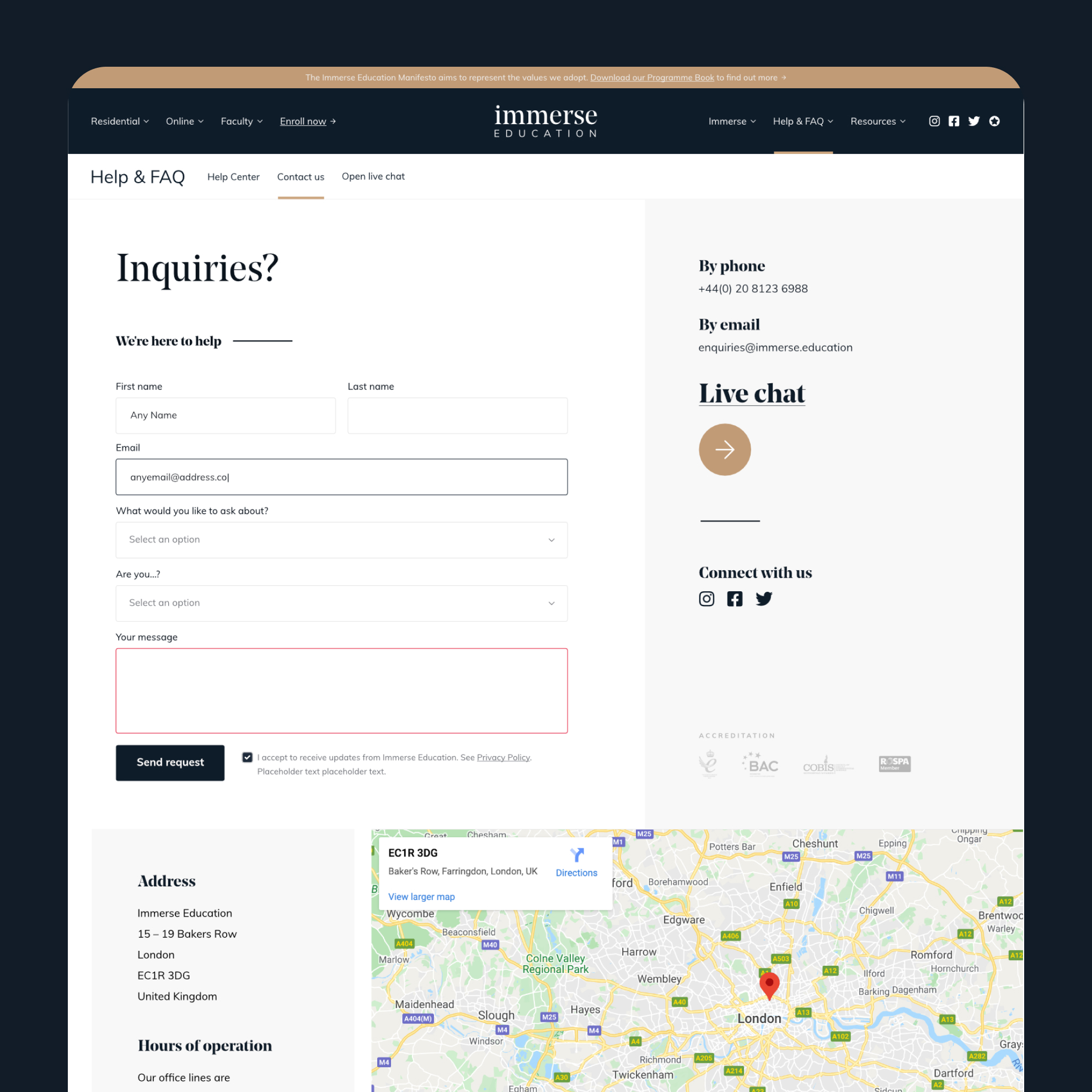
The comprehensive contact and FAQ center was designed as a single source for support, featuring an expanded multi-field inquiry form, clear contact details, and an embedded map for physical location transparency.
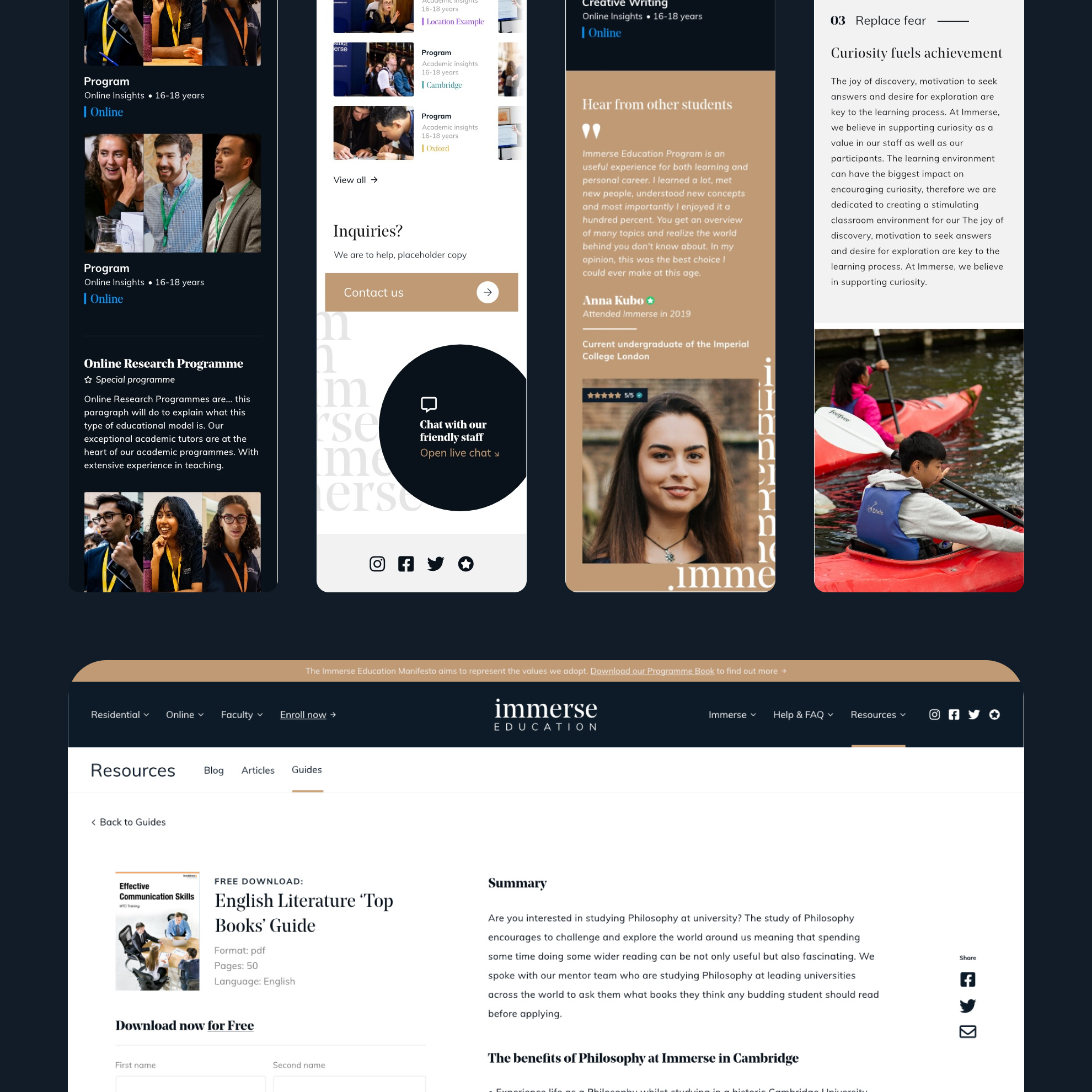
Cross-platform responsiveness was key; the mobile mega-menu was structured for simplified navigation across all program categories, and an internal page template was created to feature strategic brand content like the Manifesto.
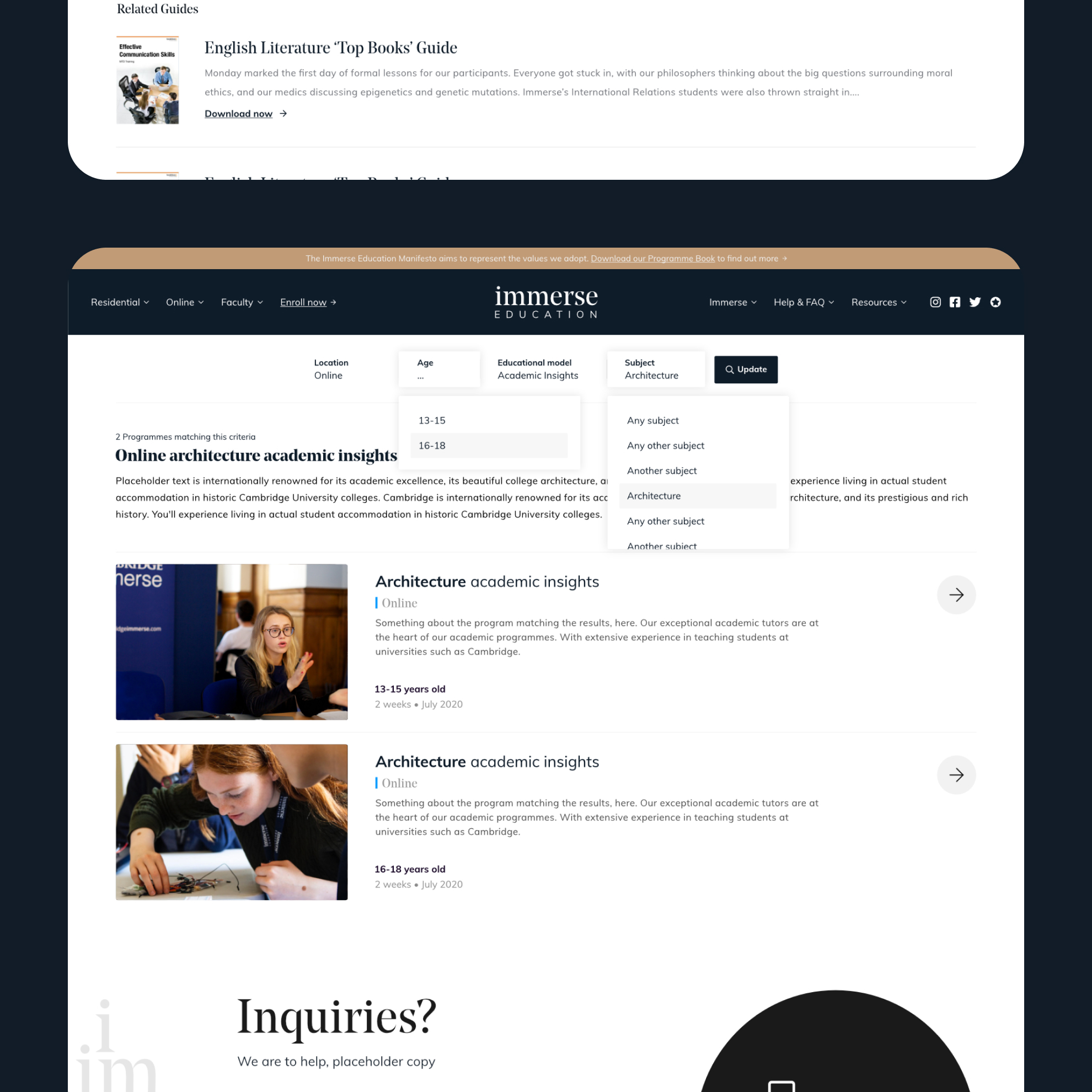
The resources hub was built with a content-first approach, using a consistent layout to promote downloadable assets and detailed articles, encouraging lead generation and topic exploration.
The interactive program search results interface was engineered to efficiently process multiple user inputs (location, age, model, subject) and instantly display relevant online program options, such as "Architecture academic insights."
A parallel online program landing page was designed for the 16-18 years old segment, mirroring the residential page's structure with a strong hero image and clear "Download prospectus" CTA.
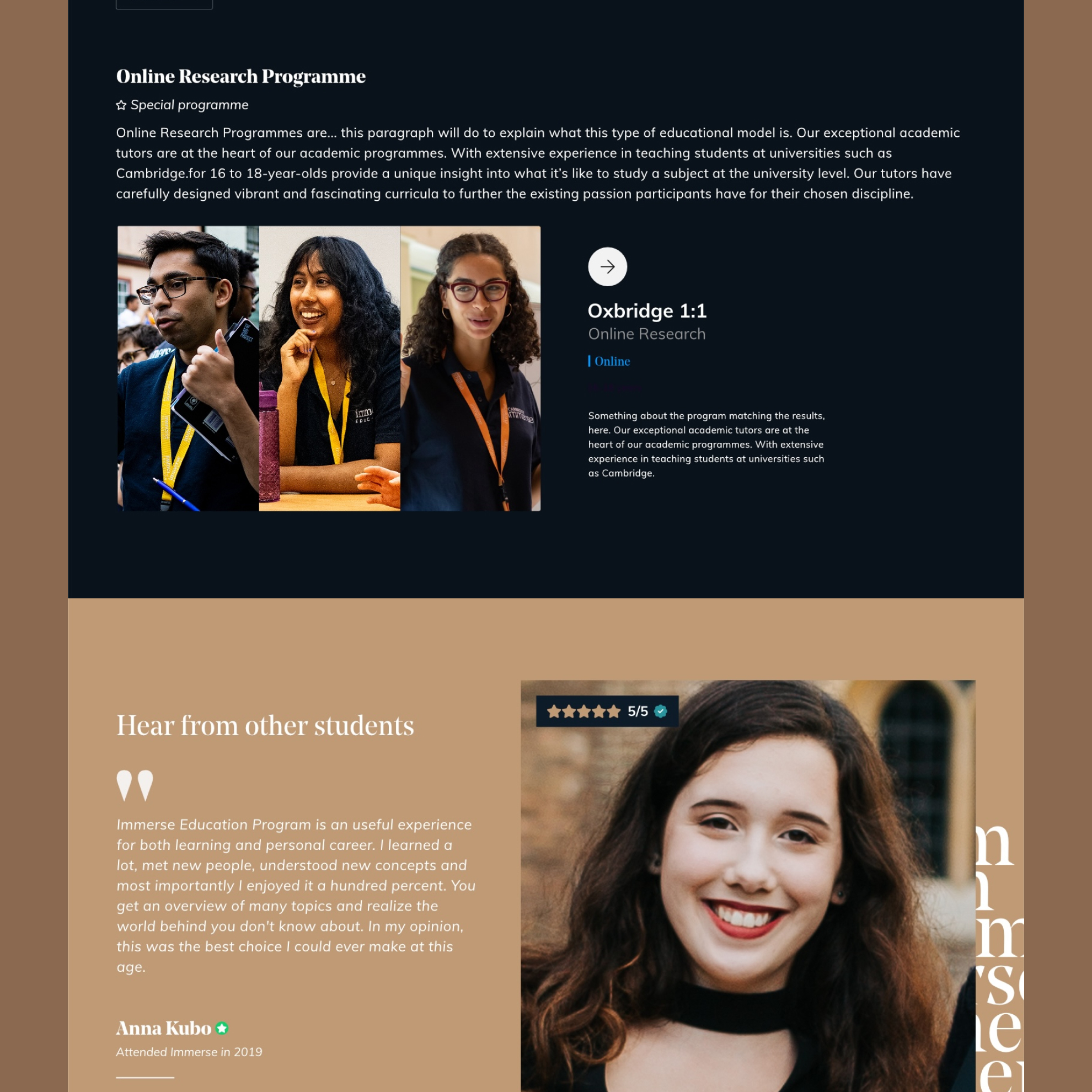
A specific program detail template was created for the "Oxbridge 1:1" online program, which also integrates a full-width "Hear from other students" social proof module to build user trust and validation.
A distinct program category landing page was developed for the "Global Symposium," featuring a unique hero section and a secondary in-page navigation bar for its specific sub-topics and content.
A flexible two-column content module was designed to detail core value propositions like "academics from world class universities," paired with a "Download prospectus" CTA to capture leads.
A reusable, simplified search component (Location, Age, Subject) was created for flexible placement on various pages, alongside a custom-designed promotional block for the "Immerse Education Essay Competition."

The brief

Immerse Education had built something genuinely valuable: residential and online academic programs at Cambridge, Oxford, and other prestige locations, designed for ambitious students aged 11 to 18. The quality of the product wasn't in question. The problem was structural. Their catalog had grown into something that required work to navigate — multiple program types, age segments, locations, and formats all sitting on a platform that wasn't built to handle that level of complexity clearly.

The ask was a full redesign. Not a refresh. A rethinking of how a prospective student or parent moves from "I want something like this" to "I'm enrolling in this specific program."

The architecture problem

Most educational websites fail in the same way: they present everything at once and ask the visitor to sort it out themselves. When your catalog includes residential summer courses at Cambridge colleges, online academic programs, 1:1 tutoring, global symposiums, and essay competitions — all for different age groups across different locations — that approach collapses immediately.

The first design decision was also the most important one: segment audiences at the entry point. Age, location, and program type needed to filter the experience from the first click, not as an afterthought buried in a sidebar.

What we built

The information architecture was rebuilt around how a prospective student actually thinks. Not "here is everything we offer" but "who are you, where are you, and what are you looking for?" — and then progressively revealing the right answer.

The interactive search engine processes multiple simultaneous inputs — location, age group, program model, subject — and returns relevant results instantly. It works the same way whether someone is looking for a residential Architecture program at Cambridge or an online Oxbridge 1:1 session, without requiring them to understand Immerse's internal taxonomy first.

Each program type got its own landing page template, and each location got a dedicated destination page with its own visual treatment and supporting content. The Cambridge pages carry photography of the colleges themselves — Gonville & Caius, the courts and quads — because for this audience, the setting is part of the value proposition.

The enrollment flow was rebuilt as a multi-step sequence with real-time price summaries and clear progress indicators. Checkout for a residential academic program is a significant commitment; the design had to match that seriousness without adding friction.

Social proof was integrated at the program level rather than siloed on a testimonials page. For an audience that includes both students and the parents making the financial decision, validation at the moment of consideration matters.

Supporting infrastructure

A standardized inquiry module was built for placement across relevant pages, offering two contact channels — a form and a live chat option — to meet different preferences at the point of decision. The resources hub was structured to serve both lead generation and genuine utility, with downloadable prospectuses and long-form content sitting in the same consistent template.

Mobile was treated as a primary concern throughout. The mega-menu was redesigned to handle the full catalog scope without collapsing into an unusable list on smaller screens.

The outcome

A platform that can actually hold the complexity of what Immerse offers without making that complexity visible to the user. The architecture does the filtering work so the visitor doesn't have to, and the conversion path from discovery to enrollment is clear at every stage.

Keep| reading, browsing, paging

Our case studies unite high-performance design and tangible results.
Ready to get started?

Deploy your stack

Whether you need to invent the future (Human Layer) or scale the present (Efficiency Layer), the infrastructure is ready.
[ Let's talk → ]

Need something else from the atQuo infrastructure?

Enter frontier layer
(You are here)
Relia
Integrated Teams